


CUSTOM WEBSITE DEVELOPMENT

Built to connect, adapt and do more.

We build around how your business works, connecting your website with data, systems and workflows, and extending into internal tools when needed.

When Custom Starts to Make Sense

When the software
needs to fit the business

Custom development becomes useful when your website or
digital tools start forcing you to work around the software
instead of the software working around your needs.

Your website needs to connect with other systems

Information needs to move between your website and a CRM, booking platform, payment system, operational tool or another source of business data.

People are moving information manually

Staff copy, update, or reconcile information between tools that could work together.

Your customers need more than public pages

Users may need personalised information, private areas, account-specific functionality or more involved interactions.

Your business data has a structure of its own

Products, assets, batches, locations, bookings, projects, or other records have relationships that generic pages don't represent well.

Important processes need their own logic

Rules, calculations, workflows, automation or dynamic behaviour are central to what the system needs to do.

You are adapting the business around the software

Workarounds, plugins and disconnected tools are starting to dictate how the business operates.

CUSTOM DEVELOPMENT

More than a website when the business needs more.

Custom development opens up what your website and digital systems can actually do. That might mean connecting to the tools your team already uses, turning business data into useful customer experiences, building private tools for staff or clients, or creating functionality around the way your business actually operates.

  • Connect existing systems

    Connect with CRMs, inventory systems, booking platforms, internal software, APIs or other tools already used by the business. Stop manual duplication and let information flow securely.

  • Turn business data into useful experiences

    Use structured or live business data to power public pages, personalised information, reporting or customer-facing experiences. Present your internal records in a clean, interactive interface.

  • Build internal tools and portals

    Create dashboards, staff tools, authenticated areas, customer portals or operational interfaces around specific business needs. Securely share private data with the right stakeholders.

  • Automate connected workflows

    Move information between systems, reduce repetitive administration and trigger actions automatically when it genuinely improves the process. Focus your team on higher-value work.

  • Create functionality around the business

    Build workflows, business rules, calculators, configurators or specialised interactions that standard template builders cannot accommodate. Your software should adapt to your operational logic.

  • Introduce AI where it is useful

    Add AI-powered search, intelligent assistants, structured content-generation workflows, or real-time analytical capabilities where AI solves a concrete business friction point, rather than adding technology for novelty's sake.

The right custom project does not replace everything. It connects what already works and builds what doesn't exist yet.

Maximiliano Chereza

OUR APPROACH

Custom where matters.
Proven where doesn't.

Custom development does not mean rebuilding every solved problem from scratch. We use established technology and proven foundations where they make sense, then focus custom development on the parts that are specific to your business.

Proven foundations

Reliable technology, patterns and reusable infrastructure for the parts of the project that do not need to be unique.

Tailored structure

Shape the content, data, editing experience, integrations and relationships around the way the business actually works.

Bespoke functionality

Build custom workflows, logic, interfaces and interactions where the requirement genuinely needs something different.

The goal is to build the simplest solution that fits properly and leaves room for what comes next.

Read more

WHAT THIS CAN LOOK LIKE

Custom development
can take many forms

Every business is different. These examples show how a website
can become part of a wider connected system when the requirement calls for it.

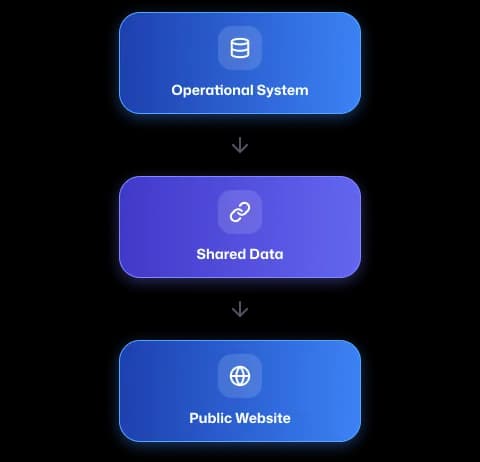
A website connected to operational data

Information managed in another system can flow into the website automatically, keeping customer-facing content connected to the data the business already uses.

Typical Use: Producers, Manufacturers, & Service Providers

Cascade Illustration
Layered Illustration

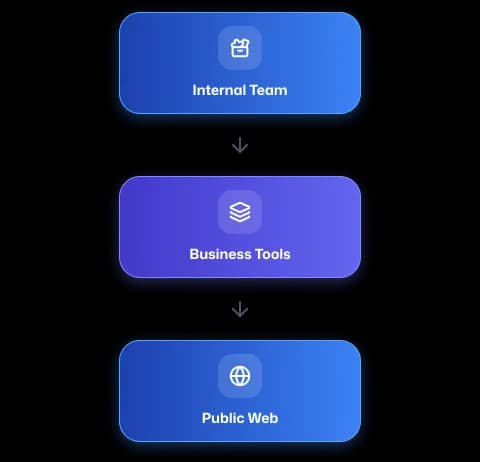
A customer experience with tools behind it

The public website can sit alongside internal interfaces that help staff manage information, trigger actions or support the customer experience.

Typical Use: Operations Teams & Client Success

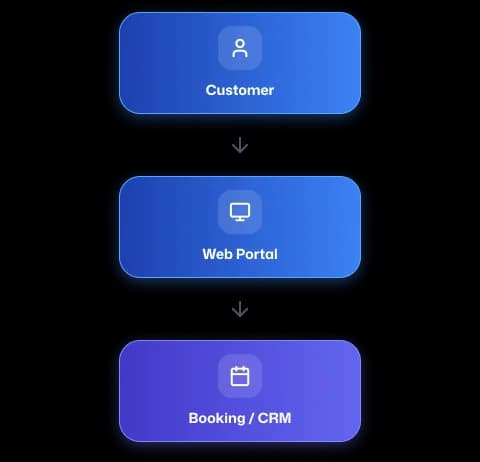
A journey that crosses several systems

An enquiry, booking, payment or account action can pass information between the website and the systems involved, reducing manual copying and disconnected processes.

Typical Use: Self-Service Portals & Booking Engines

Journey Illustration
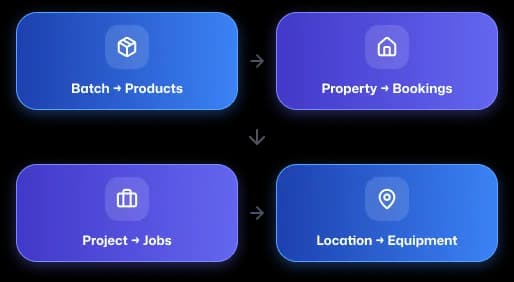
Entity Relationships

A system built around business-specific data

Instead of forcing everything into generic pages and posts, the system can represent the actual things the business manages and the relationships between them.

Typical Use: Inventory, Assets, & Relational Databases

CHOOSING THE RIGHT APPROACH

We start with the requirement, not the technology

Custom is not automatically better. The right approach depends on what the website or digital system needs to do, and how far an existing solution can take you without unnecessary compromise.

  1. 01Best For: Standard Content & Simple Commerce

    Use an established solution

    If an existing platform meets the requirement cleanly, adding unnecessary complexity may not add much value. WordPress, an existing booking platform, an established e-commerce solution, or another proven product or service. Use what already works when it genuinely fits.

  2. 02Best For: Integration-Heavy Business Sites

    Tailor the foundation

    If the fundamentals are right but the structure, integrations, content model, or experience needs more specificity, we adapt the foundation to the business. Keep what works, customise what matters to maintain operational speed.

  3. 03Best For: Proprietary Workflows & Private Portals

    Build what is required

    When the platform itself becomes the constraint, deeper custom development makes sense. Build business-specific logic, custom interfaces, structured data, connected workflows, internal tools, and application-like functionality from the ground up.

The solution doesn't have to end at the website. If part of the project grows into an internal tool, application or larger software product, it can become its own part of the system while staying connected to the rest.

BUILT FOR THE LONG TERM

Built to stay useful
as your business evolves

A custom solution should not become difficult to manage the moment it launches.
We make decisions with the people who will use, maintain and evolve it in mind.

Practical to manage

Your team should be able to manage the content, records, and day-to-day actions that the system was designed to support.

Ordinary business activity should not require a developer.

Maintainable by design

The solution should be clearly structured so future changes, fixes, and development don't become unnecessarily difficult.

Custom should not mean fragile or opaque.

Ready to evolve

The system should leave room for new functionality, new integrations and changing business requirements without forcing an immediate rebuild.

Build for what is needed now, without blocking what may come next.

The right level of independence

Some projects are designed for full handover. Others may continue on a managed foundation or evolve with Kurī over time. The delivery model should be clear and appropriate to the project.

Different projects need different levels of ongoing involvement.

Support when it adds value

Kurī can remain involved in maintenance, improvement, and new development where useful, without making ordinary business changes artificially dependent on us.

Support should solve a real need, not create unnecessary dependency.

You should need a developer when the software needs to change, not every time the business does.

FAQ

Questions before going custom

From cost and timelines to integrations, handover and ongoing support, here are the
questions worth answering before deciding what kind of solution makes sense.

Let's talk

Not sure how much custom development
you actually need?

Tell us what the website or digital system needs to do. We can help determine whether an established platform, a tailored solution, or deeper custom development is the right fit.

You do not need to arrive with the technical answer.

Talk about your project