
Digital Strategy
Operations
Business Efficiency
Focused project

Maximiliano Chereza
28 February 2026
5 min read
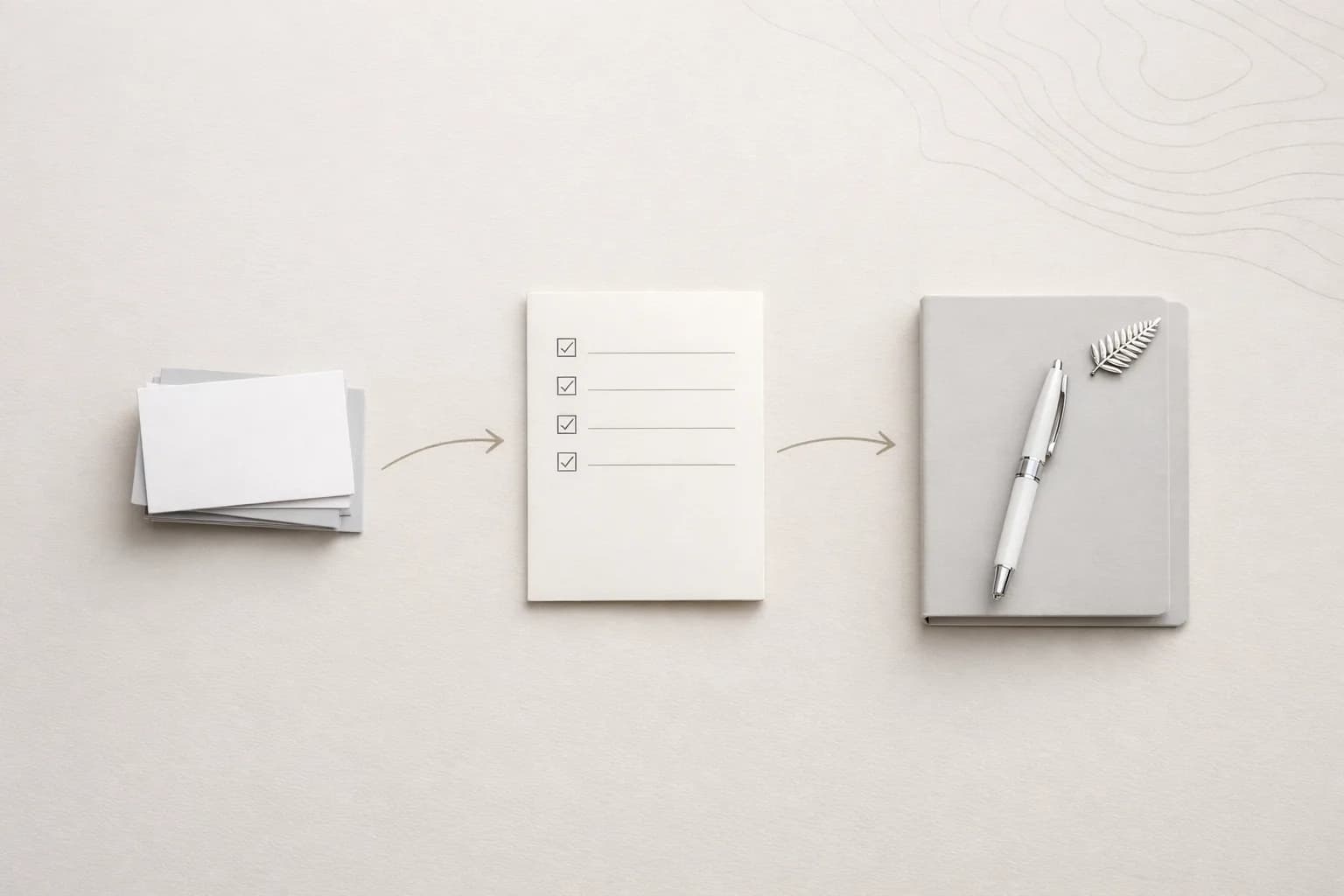
A focused engagement with a defined outcome, clear milestones, and a structured handover your team can run with.
When a focused project is the right move
A focused project is for the moments when you do not need an open-ended engagement. You need one clearly scoped piece of work delivered well, with the right thinking behind it and a clear result at the end.
This is common in established businesses. You can see what needs to change. You know the outcome you want. What you do not want is a vague "we'll see how we go" process that expands as it goes.
A focused project creates momentum because it gives everyone the same map to follow. It reduces uncertainty, keeps decision-making practical, and protects your team's time.
Ongoing support is not the only path to progress
Long-term partnerships can be valuable when priorities shift often or when you need continual optimisation. There are also times when that is not the most efficient shape for the work.
If the goal is specific, the dependencies are known, and the success criteria can be defined, a project format is often cleaner. It makes it easier to plan around, budget for, and complete without lingering loose ends.
It also respects the reality of busy teams. You can commit to a clear window of effort, secure the outcome, and then return to running the business.
The real risk is not the work. It is the shape of the work.
Most digital work does not fail because people are incapable. It fails because the work is not structured.
When the scope is fuzzy, timelines become optional. When priorities are not agreed upon, decisions get revisited. When handover is rushed, the "finished" work quietly turns into an ongoing dependency.
That is why a focused project is not just "a smaller engagement". It is a deliberate structure designed to protect clarity from start to finish.
What "focused" actually means
A focused project still includes thinking. It is not a task list you throw over the fence.
Focused means:
- the outcome is defined
- the decisions needed to get there are made early
- milestones are clear
- implementation is careful, not hurried
- handover is part of the deliverable, not an afterthought
This is how you get work that feels finished, not work that "technically shipped" but still creates questions and stress.
Discovery and audit come first, because assumptions cost time
Even when the goal is clear, the current setup often has hidden complexity. Old plugins. Half-connected tools. Manual workarounds. Content that has grown sideways over the years.
Starting with discovery and audit is what keeps the rest of the project grounded. It lets you see what you are actually working with, identify the real constraints, and decide what matters most before you spend time building the wrong thing.
This stage is also where trade-offs become visible. If there are multiple ways to reach the goal, you can choose the one that best suits your team's capacity, plans, and tolerance for complexity.
A defined project scope is a confidence tool
A defined project scope is not about rigidity. It is about shared understanding.
When the scope is clear, your internal stakeholders can relax. Everyone knows what is included, what is not, and where decisions need to happen. It also makes it easier to protect quality, because the work is not constantly expanding to absorb "just one more thing".
Good scope includes:
- what success looks like
- what will be delivered
- what needs input from your team
- what the timeline and milestones are
- what the handover will cover
If any of those are missing, the project may still move forward, but it will not feel clean.
Thoughtful implementation and integration is where quality shows up
The middle phase of a project is where many teams get burned. The plan is clear, but the delivery becomes rushed. Integrations are added quickly. Small issues are left for "later". Documentation is postponed.
A better approach treats implementation and integration as the main event.
That means building with structure, keeping changes safe, and paying attention to the details that shape reliability. It also means making sure tools actually talk to each other in the way your business needs, rather than in the way the tool's default settings happen to allow.
For many businesses, the difference between "it works" and "it works properly" is what determines whether the project creates relief or adds ongoing noise.
Milestones are not admin. They keep the momentum real.
Milestones do two things. They keep the project moving and communicable within your business.
When work is invisible, people fill the gap with worry. When progress is tangible, everyone can stay aligned without constant meetings.
Clear milestones also give you natural moments to confirm direction. Not to second-guess everything, but to ensure the project is still tracking towards the defined outcome.
Structured handover is what makes the result usable
A project is not complete when something is live. It is complete when your team can run it.
That is why structured handover matters. Documentation, training, and a clean wrap-up are not "nice extras". They are what turns delivery into independence.
Handover should leave you with clarity on:
- what was changed and why
- how to manage the new setup safely
- what to watch for
- what to do if something breaks
- where future improvements could be made
Kurī Studio's fixed-scope project approach is built around discovery, a clear plan and timeline, careful implementation, and a structured handover with training and documentation.
How to know if a focused project fits your situation
A focused project is usually a good fit when:
- you have a clear outcome you want to achieve
- the work can be scoped without guessing
- you want high-quality delivery without ongoing retainers
- your team needs confidence and control at the end
- you want to reduce friction, not introduce more tools and complexity
If your priorities shift weekly or you need continuous optimisation across many areas, a flexible support model can be a better fit. The key is choosing the structure that matches reality.
The point is, momentum you can keep
The best focused projects do more than "tick the box". They create a visible step forward that makes the next month easier.
They remove a bottleneck. They simplify a process. They improve how your website supports trust. They connect systems so your team stops having to bridge gaps manually. They give you back control over something that has become stressful.
Most importantly, they finish with clarity. Your team knows what changed, how to use it, and what to do next.
Start with a clear outcome
If you have a specific digital goal and want it delivered with a defined scope, clear milestones, and a confident handover, we can help you map the simplest path and execute it properly.
Book a short call