
Business Efficiency
Operations
Growth Systems
Automations
Less noise, more focus

Maximiliano Chereza
28 February 2026
5 min read
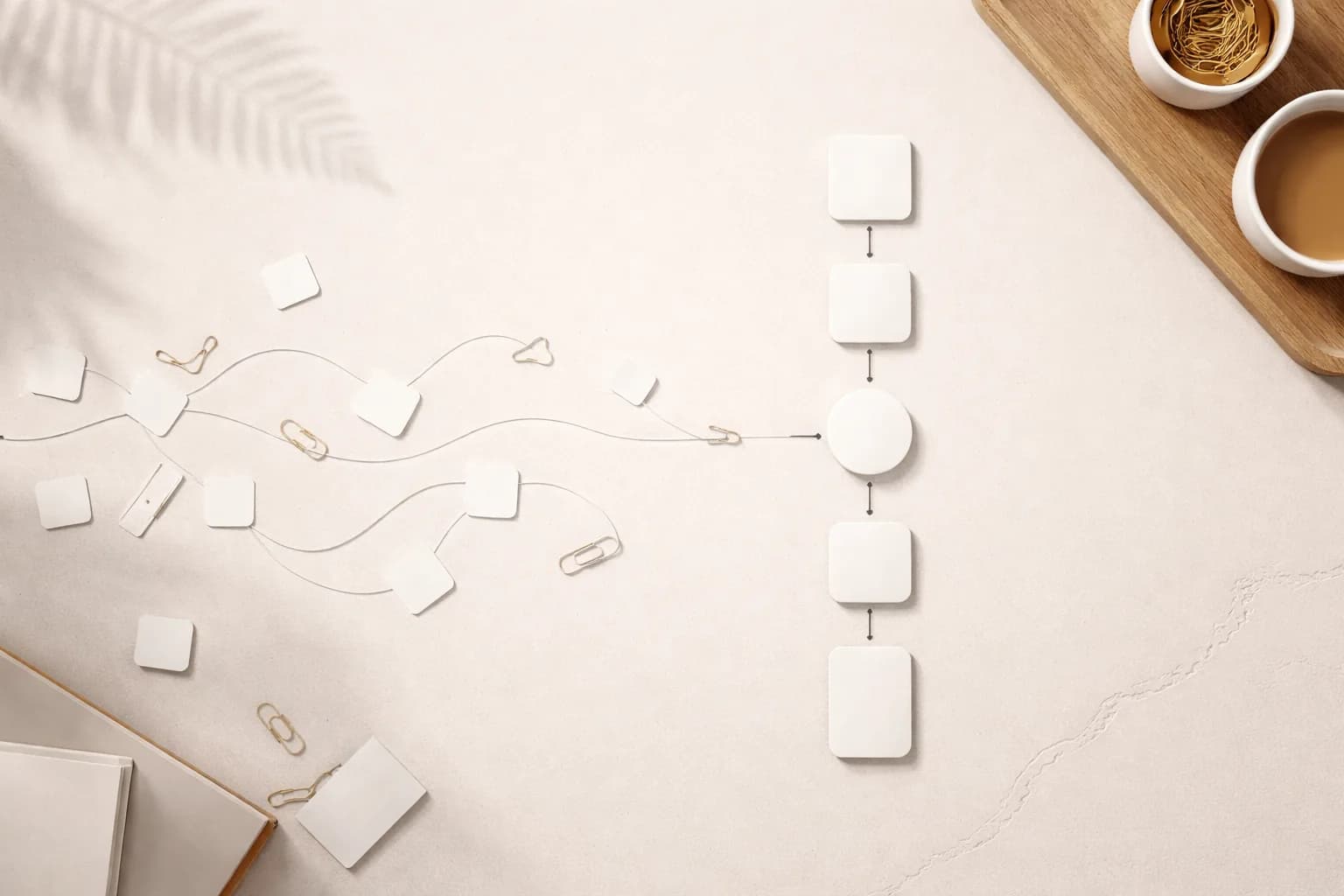
Reducing duplication and manual tasks creates space for meaningful work.
The real cost of noise at work
When people talk about focus, they often talk about habits, fewer meetings, better time blocking, and more discipline.
But for many established teams, focus is not a matter of willpower. It is a workflow efficiency problem. When the day is full of duplication, manual steps, and small interruptions, attention gets fractured before anyone even reaches the meaningful work.
That noise has a cost not just in hours, but in momentum. Work feels heavier than it should, and progress becomes something you push for rather than something your systems support.
Duplication is rarely just admin
Duplication usually shows up as harmless, everyday behaviour. Copying details from one tool to another, re-entering the same information for different teams, and rebuilding the same report each week because no one trusts the numbers.
Individually, each task looks small. Collectively, they create operational drag. They also create inconsistency, because the "same" data now exists in multiple places and changes at different speeds.
Over time, your people become the glue holding the system together. That might work when you are smaller, but it does not scale cleanly.
Manual steps steal more than time
Manual work not only slows delivery. It increases checking, re-checking, and follow-ups. It makes handovers brittle because context lives in someone's head or in a thread that is hard to find later.
It also changes how people feel about work. When skilled teams spend their best attention on maintenance, they become cautious. They stop improving things because improving feels like extra work on top of already heavy work.
If your business relies on manual bridging between tools, it is usually a sign that your systems aren't carrying their share of the load.
Better focus comes from structure, not pressure
There is a point where "trying harder" starts to backfire. People compensate for unclear systems by being more responsive, more available, and more vigilant.
That creates a workplace that looks busy but feels scattered. It also makes strategic work harder to protect because the urgent keeps arriving.
Streamlined workflows change that dynamic. When steps are clear, information moves properly, and status is visible without chasing, attention naturally returns to the work that moves the business forward.
One good test: "How many times do we touch the same information?"
A practical way to spot avoidable friction is to follow one piece of work from start to finish. Choose something common, like a new client onboarding, a job moving from sales to delivery, or a regular operational request.
Then look for where the same information is handled again, where it is copied, reformatted, re-approved, or re-explained. Those repeat points are your shortlist.
In many cases, the fix is not a big platform change. It is a few targeted adjustments that reduce manual handling and clarify who owns what at each stage.
Workflow efficiency means fewer "human bridges"
There is a lot of operational noise because systems do not talk to each other. So a person becomes the bridge.
They move details from email to a spreadsheet, then to a project board, then to an invoice, and finally to a report. That is not a people problem. That is a design problem.
When tools are connected and workflows reflect how the business actually runs, information can move once, cleanly. That reduces duplication, lowers error rates, and makes work easier to hand over without losing context.
Where noise hides in established businesses
If you are not sure where to start, look for patterns your team has quietly accepted as normal. You might notice:
- Regular copy-paste between tools
- Approvals that rely on chasing the same people
- Reporting was rebuilt from scratch because the "source of truth" is unclear
- Spreadsheets that exist purely to create visibility for your systems do not provide
These are not failures. They are signals. They show you where structure is missing and where small changes can create immediate relief.
What "streamlined" should actually feel like
Streamlining is not about turning work into a machine. It is about reducing avoidable friction so people can do higher-value work with steadier attention.
Good systems do a few simple things well. They make the next step obvious. They reduce re-entry. They surface status without meetings. They help exceptions stand out early rather than appearing as last-minute surprises.
When that happens, teams protect their focus more easily because focus is not something they have to fight for. It is supported by the way work moves.
Keep the goal human: more space for meaningful work
It can be tempting to frame this as "efficiency at all costs". That is not the point.
The point is to create room. Room for careful thinking. Room for quality. Room to improve what you deliver, not just keep it moving.
For ambitious, established businesses, that shift matters. It helps you maintain standards as complexity increases, without turning every week into a coordination exercise.
A calm starting point that creates momentum
If you want less noise and more focus, start with one workflow that runs often and creates friction. Map what actually happens today, including handovers and waiting time.
Then pick one change that removes a repeated manual step or eliminates duplication between tools. Make it small enough that the team can adopt it without disruption.
Once you feel the difference, it becomes easier to keep going. The work gets lighter, and the business gains more capacity to do the work that genuinely matters.
Create space for better work
If duplication and manual steps are quietly draining focus, we can help you identify the pressure points and simplify the workflows that matter most. The goal is clearer flow, better visibility, and more room for high-value work.
Book a short call